
A teak wood chopping board will last decades. But it’s not about durability alone. Teak wood chopping boards are an investment and just like any other investment, you need to take care of your cutting board too. Regular maintenance, oiling and addressing issues related to the board’s wear and tear should be taken care of promptly. This article is dedicated to some of the key concerns, questions and problems most people face, after and during the purchase of a teak wood cutting board.
Is teak wood good for chopping board?
A question which is commonly asked, many wonder if teak wood cutting boards are good. Teak wood boards are expensive, durable and tough. Teak wood is antibacterial and look good and are moderately gentle on knives depending on the construction. In general, teak wood chopping boards are considered superior among all other wooden boards.
Is teak wood chopping board healthy?
When it comes to cutting boards, a lot of conversation revolves around health issues caused by chopping boards. Plastic boards are considered the worst with cross-contamination issues, plastic seepage and cancer-causing agents. Bamboo boards are terrible with adhesives, industrial chemicals during processing and wooden boards, especially the joint boards are considered bad due to the glue used. Teak wood cutting boards are considered the gold standard when it comes to health. Teak wood is antibacterial, self-healing and has a high oil content which prevents bacterial growth and also kills bacteria in a few seconds on contact. In general, teak wood chopping board is healthy, durable and aesthetically pleasing.
Is teak wood or bamboo better for cutting boards?
Bamboo is a great material for cutting boards but the processing of bamboo and the transformation of bamboo from its plant to the cutting board is often concerning. Chemicals, glues and conditions that are not often considered the best are all factors for bamboo cutting boards being on the bad side. They are glued together, layer by layer using adhesives, often industrial grade and not considered food safe. They also tend to split over time, become vulnerable to fungus and mold in comparison to teak wood. Teak wood can be rated as a board with a ranking of 9/10 while bamboo is often rated at around 5.5/10. Though bamboo is more sustainable and easily available, cheap too, teak is a lot better in terms of quality and luxury.
What are the negatives of teak wood cutting board?
The only negative that you will find in a teak wood cutting board is the price.Teak wood cutting boards are priced more than double of most wooden boards. While acacia wood is sold for 1000 Rs, teak is often 3000 Rs or higher. The better the quality of the teak, the price goes higher. Good teak wood cutting boards usually cost around 3000 for a 10x16x1 inch board. The same-sized bamboo board would cost not more than 600 Rs and a plastic board is even cheaper.
Can you cut raw meat on a teak cutting board?
YES. Teak wood cutting boards make some of the best butcher blocks. You should consider an end-grain board for a butcher block, especially if it involves heavy chopping. You can go for a thick edge-grain teak wood board too. In general, teak wood chopping boards can withstand a decent blow without an effect. Being antibacterial and self-healing also makes teak wood chopping board the best for cutting meat. We recommend that you use a separate teak wood chopping board for vegetables to prevent cross contamination. an alternative would be a reversible teak wood chopping board with grooves on one side, where you can use one side for vegetables (preferably the side without grooves) and the other side for Meat.
Is teak wood toxic?
Teak wood in general is not toxic when used as a cutting board. Teak wood dust on the other hand may have some reactions to people, especially those who are sensitive to dust. Teak wood dust results in burning sensations, itching and headache to some. In general though, when teak wood is used as a cutting board, it is safe and free from toxic effects.
Should I oil my teak wood chopping boards?
Oiling your board enhances your board’s life, reduces moisture escape, retains effective moisture and replenishes the oil content in the wood. This results in longer life for the teak wood chopping board while also improving the performance of your teak wood cutting board simultaneously making it look good. Teak wood chopping boards should be oiled at least once a month and more frequently during the first few weeks of use. one of the key benefits of teak wood chopping boards is its lower maintenance compared to other wooden cutting boards.
How do I know if my chopping board is made of genuine teak?
The first indication to identify teak wood is its weight. A dense teak wood chopping board will feel a lot heavier than most wooden boards. Teak wood is dense and the grains are close. This makes the wood more durable and tough. If your wooden chopping board has not gone through any polish or coatings, you can place a drop of oil to see if it spreads or is absorbed. If the water spreads or is absorbed in 2–3 minutes, chances are the board is not genuine teak. Teak wood is high in oil content, very resistant to moisture and water. The other way to know if it’s teak is by sense and smell. Run your palm across the flat smooth surface of the board. If it’s oily and smooth, chances are it is genuine teak. The smell should be earthy and leathery.
How do I disinfect teak wood cutting boards?
All wooden cutting boards go through the same disinfection process. The most common is to use a vinegar-salt solution or a lemon-salt scrub. In extreme cases, you can use baking powder, salt and lemon scrubs. While not recommended, hydrogen peroxide solution is also used for disinfecting teak wood cutting boards. Always remember to oil your board after drying your board thoroughly post disinfection.
Which wood is better than teak?
Most wood experts will agree that teak is one of the most premium, luxury wood which excels most other wood. There is rarely any wood that is better than teak. While most wood have their own purpose and beauty, teak excels in every area and is versatile in its uses. This is the reason why teak is considered a gold-standard wood, used in everything from crafts to building and construction. The Teak wood guide helps understand what Teak is good for and what it is not. Understanding the qualities of teak will help realize why teak is superior than most other woods.
Is Indian teak good, better than Burmese teak?
Some Indian teak, especially Nilambur teak, if forest-grown, is considered near par with Burmese teak. Burmese teak is definitely superior. This is because Burmese teak is forest-grown and aged. Some Burmese teak trees are often more than 70 or 80 years, making it a prized wood. Malabar teak usually are 40–50 years and though they have similar properties, vary slightly. Other Indian teak types like the Valsadi teak are considered slightly lower quality than Malabar teak due to the lesser oil content in the wood.
Is the teak wood chopping board termite resistant?
Teak wood in general is termite proof, even when they are not treated with any chemicals. The dark heartwood is more termite resistant than the sapwood of the teak. The sapwood of teak is often known to be lighter and not termite proof while the dense darker areas of the wood are termite proof. When you purchase a teak wood chopping board, ensure that the wood is more dark and less light wood. This ensures your board is termite proof.
Should I buy an End grain or an Edge grain Teak wood chopping board?
A common question that most home users worry about is whether an end grain Teak wood chopping board is better than an edge grain Teak wood chopping board. The use of both these chopping boards are different. their qualities vary and the construction is different. End grain boards are commonly available in joint wood and are 2 inches thick. Edge grain boards are available in Joint construction and single blocks. They can be 1 inch thick or more. We recommend the single block edge grain for most cases but professional chefs who cook meat or have an expensive knife collection prefer an end grain chopping board made of teak, due to its ability to retain knife sharpness for longer. Choosing a Teak wood chopping board is more of how you intend to use it and the purpose of your purchase. If you are a vegetarian and a regular home cook, a good single block teak wood chopping board will last decades.
How long do Teak wood chopping boards last
Durability and lifespan is one of the key features which determines purchase of a teak wood chopping board . Teak wood chopping boards last anywhere between 10 to 50 years. This depends on the quality of the teak wood, the maintenance of the board and the usage. For home use, teak wood chopping boards will last anywhere between 10 years to 25 years with regular use provided it’s maintained moderately. You can expect up to 50 years of life for a teak wood chopping board if it’s sparingly used and is well maintained. The key to longer life of a teak wood chopping board lies in the maintenance. Avoid exposure to sunlight, keep the board clean, oil the board at least once a month or when it feels dry and do not soak the board in water or use a dishwasher. Resurfacing the board once in a year or when there are too many scratches will ensure that the board feels new.
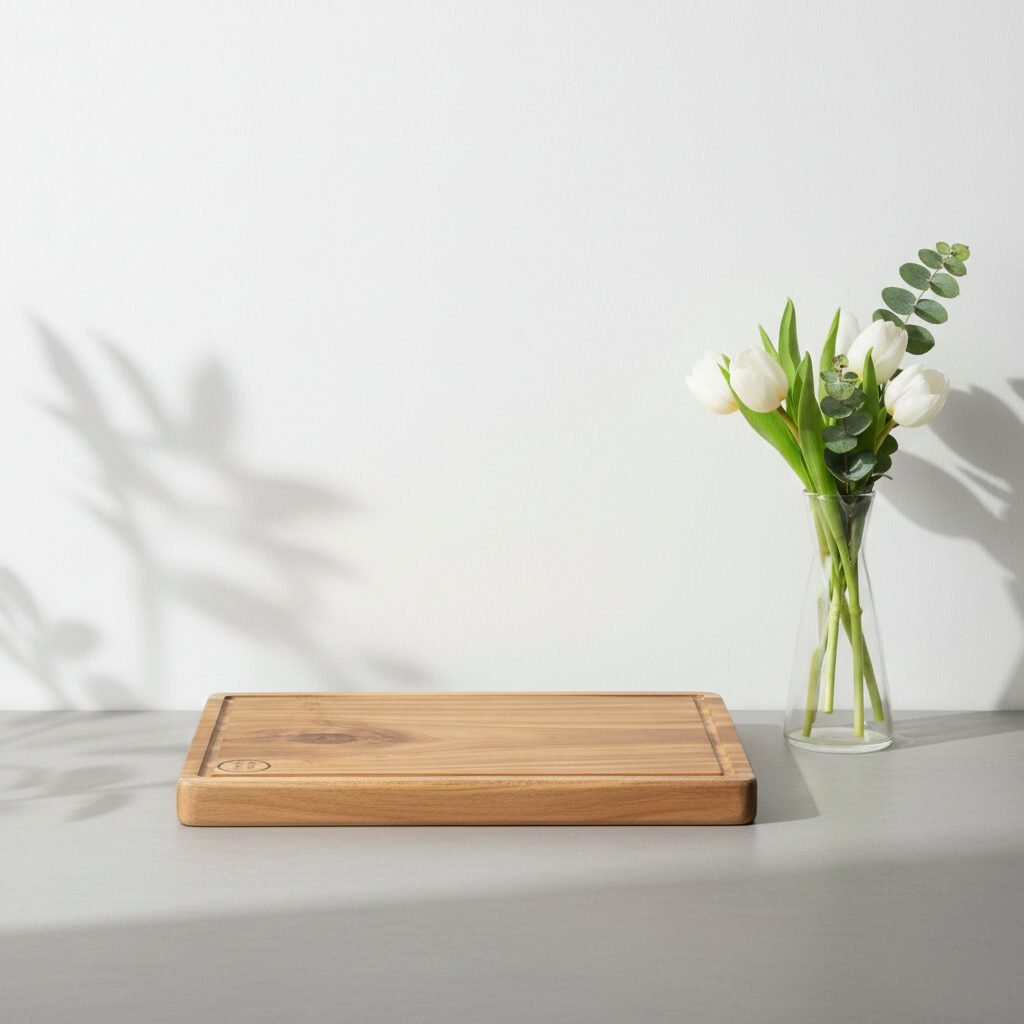
Shop Teak Wood Cutting Boards
Luxury Wooden Chopping boards to match your Beautiful home
