
Woods have their own benefits. While some woods are great for furniture, there are others which are great for arts and crafts. Some woods are important for their medicinal benefits too. While crafting a chopping board, you need to consider a lot of features like the hardness of the wood, the construction of the cutting board, and its durability. We all have our own needs, but did you know that there are woods that have medicinal properties? One of the most common woods with medicinal properties that we all know is neem. But it’s not just neem that has medicinal properties. A lot of woods are known to have a set of their own benefits.
This article explores some of the most common woods available in India with medicinal properties. While some woods are great for constructing a cutting board, others may be weak yet beneficial for your health.
Neem wood chopping boards
Everyone knows neem is one of the most common ingredients in Ayurveda for skin disease, detox, and oral care. Neem is also a great wood for chopping boards as it is antibacterial and contains a compound called azadirachtin. Neem helps with various other health problems. While the use of a neem chopping board is not going to cure your problems, it is a small lifestyle change for a healthier you. Widely available in India, neem is used for anything including brushing teeth to the construction of utensils. Neem is known as a detoxifier and purifier in Ayurveda. Neem is also one of the best materials to create pest-resistant storage boxes. when purchasing a neem wood chopping board be sure to purchase one which is thick. Thick neem wood chopping boards prevent warping and cracking.
Teak wood chopping boards:
While teak wood is prized for its beauty and durability, teak has its own set of benefits. The bark and wood oil have antiseptic, anti-inflammatory, and antifungal properties. In Ayurvedic medicine, Teak wood and plant extracts are used for bronchitis, ulcers, and headaches. The wood contains tectoquinone known for its antibacterial effects. The rich oil content prevents mold and fungus, making it one of the best materials for wooden chopping boards. Teak wood cutting boards are expensive, but their benefits go beyond durability and beauty. They are also naturally healthy. Teak wood is also considered the safest wood to use for chopping boards.
Arjun wood chopping boards:
The Arjun tree is grown throughout India. They are used for Ayurvedic formulations of arjunarishta, natural tonics, and bark powders. The wood is used for handles, agricultural tools, and small crafts. Not widely used, the wood is hard to work with. They are dense and can weigh 800–850 kg per cubic meter. It is a strong and dense wood. The bark and wood extracts are rich in arjunolic acid, flavonoids, and tannins. It is also known for its cardioprotective, antioxidant, and anti-inflammatory properties. Very effective for heart diseases, high blood pressure patients, and people with chest pain issues.
Jamun wood chopping boards:
Known for its fruit, Jamun or the Indian plum is available in most parts of India but is more common in Kerala, Tamil Nadu, Maharashtra, and West Bengal. The heartwood is reddish-brown, dense, and dark. The wood is hard, tough, and moisture resistant. The wood contains jamboline, tannins, and ellagic acid and is known to be antidiabetic, antibacterial, and antioxidant. They are used for blood sugar control, skin health, and digestive wellness. Jamun wood chopping boards, especially if constructed from a single block of wood, are worth a buy because they are rare.
Amla wood cutting boards:
Amla wood is not widely used for chopping boards because it is relatively soft, porous, and has a lower density compared to most other woods. But Amla has its own set of benefits. Its antioxidant features with emblicanin can help with immunity and skin diseases. Amla wood is traditionally used in wells to ensure clean drinking water and enhance taste. Well bottoms were lined with Amla wood and it would stay there for years, fully submerged, helping with cleansing the water. Though not as tough as other woods, the Amla wood is worth considering for cutting boards.
Related Topics
Reasons Why Wooden Chopping Boards Are Better Than Plastic
Plastic has been the preferred choice for chopping vegetables and meat in the past decade. Many users have had complaints about plastic chopping boards, yet they go back to plastic boards time and again. Understanding why wooden cutting boards are better than plastic chopping boards and where they excel will give you a clear perspective…
What to look for when purchasing a teak wood cutting board and how to identify teak wood
Most people are not experts in wood. They believe the wood they purchase is genuine, but this may not be the case. Even with genuine teak, the origin of the wood is important. Apart from the origin, the quality or the grade plays a major role in the life of a teak wood cutting board.…
Hinoki chopping boards in India
The new trend in wooden chopping boards are the hinoki chopping boards, imported from Japan. The Japanese cypress valued for its straight fine grains and light color, the hinoki boards are light and prized in Japanese cooking for tradition and practicality. The subtle citrusy aroma is unique to the Japanese cypress wood. Hinoki wood is…
What chopping board do professional chefs use?
When you enter a professional chef’s Home Kitchen, the one tool you will inevitably notice is the chopping board. While a professional kitchen may present you with a plastic chopping board, the home kitchen of professional chefs says a completely different story. What chopping boards do professional chefs use at home? Is it plastic for…
Are Steel Chopping Boards Becoming Popular in Commercial Kitchens?
Commercial kitchen equipment is chosen for its food safety and operational efficiency, but when it comes to chopping boards, they are required to have a few more factors which affect the choice. For instance, knife maintenance, easy to clean, sanitary benefits, and more. Steel chopping boards in professional kitchens have their own set of advantages,…
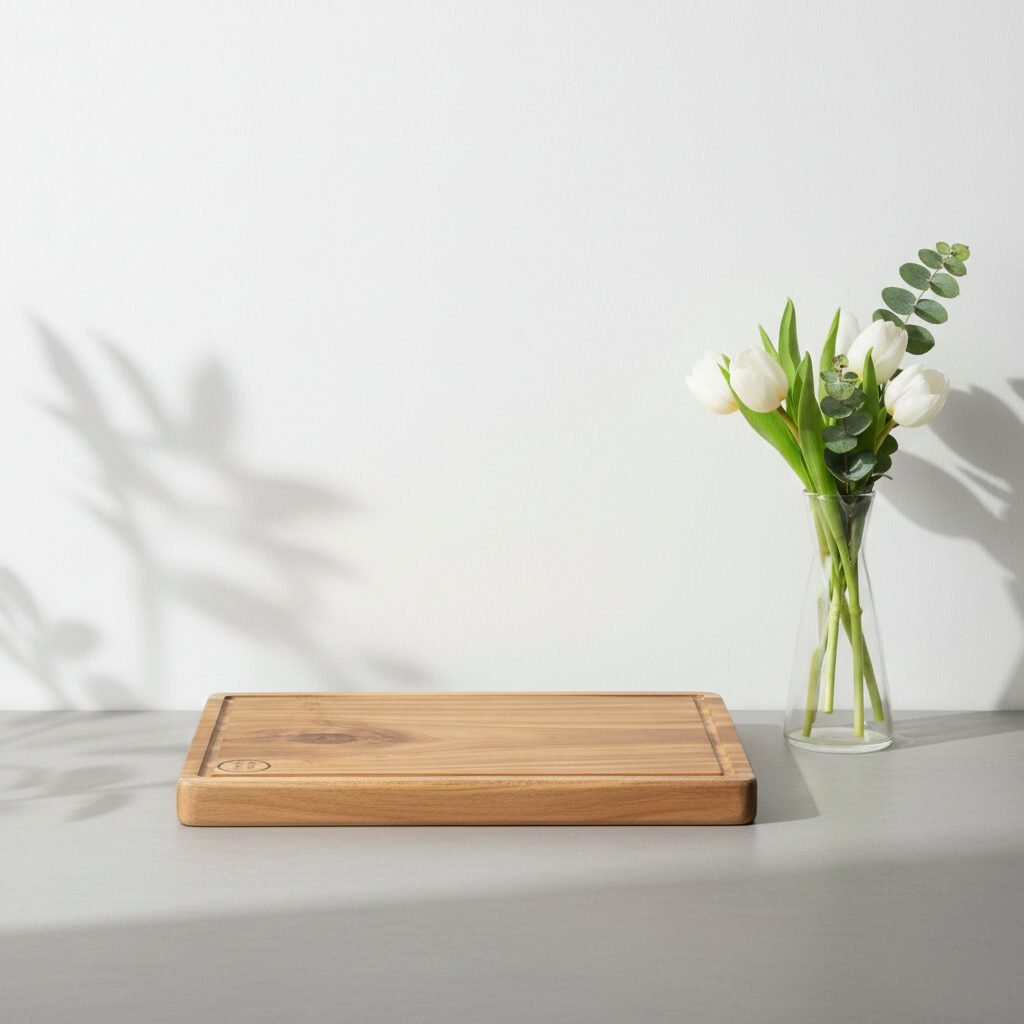
Shop Teak Wood Cutting Boards
Luxury cutting boards in Authentic Malabar Teak wood
