
The dilemma shoppers face when purchasing a chopping board is no different from that of a fashion enthusiast. The wide variety of material, the designs and features may often be confusing to a homemaker, when purchasing a chopping board. With a variety of material from steel, glass, wood, bamboo, plastic and stone, the choice in material makes decision-making difficult. Each material has its own set of pros and cons. Glass is sleek, hygienic and dishwasher safe, granite is heavyweight and luxurious, offering longevity, plastic is affordable and dishwasher safe while bamboo caters to the eco-conscious. Wooden boards play by a different set of rules altogether, catering to a niche set of users who look for everything in one. This article specifically details the difference between varieties of material compared to teak wood in particular.
Why Teak Wood Is a Popular Choice for Chopping Boards Among Professional Chefs and Home Cooks
Shop Wooden Chopping boards
Single Block Chopping Board 14×7×.75 Inch – Rectangular Teak Wood Edge Grain Cutting Board
Original price was: ₹999.00.₹599.00Current price is: ₹599.00.Small Premium Single Block Teak Wood Bar Chopping Board 14×8 x1 inch – Wooden Cutting Board
Original price was: ₹2,899.00.₹1,399.00Current price is: ₹1,399.00.Large Single Block Teak Wood Chopping Board 15×9×1 Inch – Rectangular Edge Grain Cutting Board
Original price was: ₹3,499.00.₹1,999.00Current price is: ₹1,999.00.Medium Premium Single Block Tamarind Wood Chopping Board 10×16×1.5 Inch – PuliMutti Collection
Original price was: ₹2,479.00.₹1,499.00Current price is: ₹1,499.00.Teak Wood Carving Board 10×16×1 Inch – Solid Cutting Board with Juice Grooves | Craft Series
Original price was: ₹3,399.00.₹1,999.00Current price is: ₹1,999.00.Teak Wood Chopping board | Single Block Teak Wood 10×16×1 Inch – Rectangular Edge Grain Cutting Board
Original price was: ₹3,999.00.₹2,699.00Current price is: ₹2,699.00.
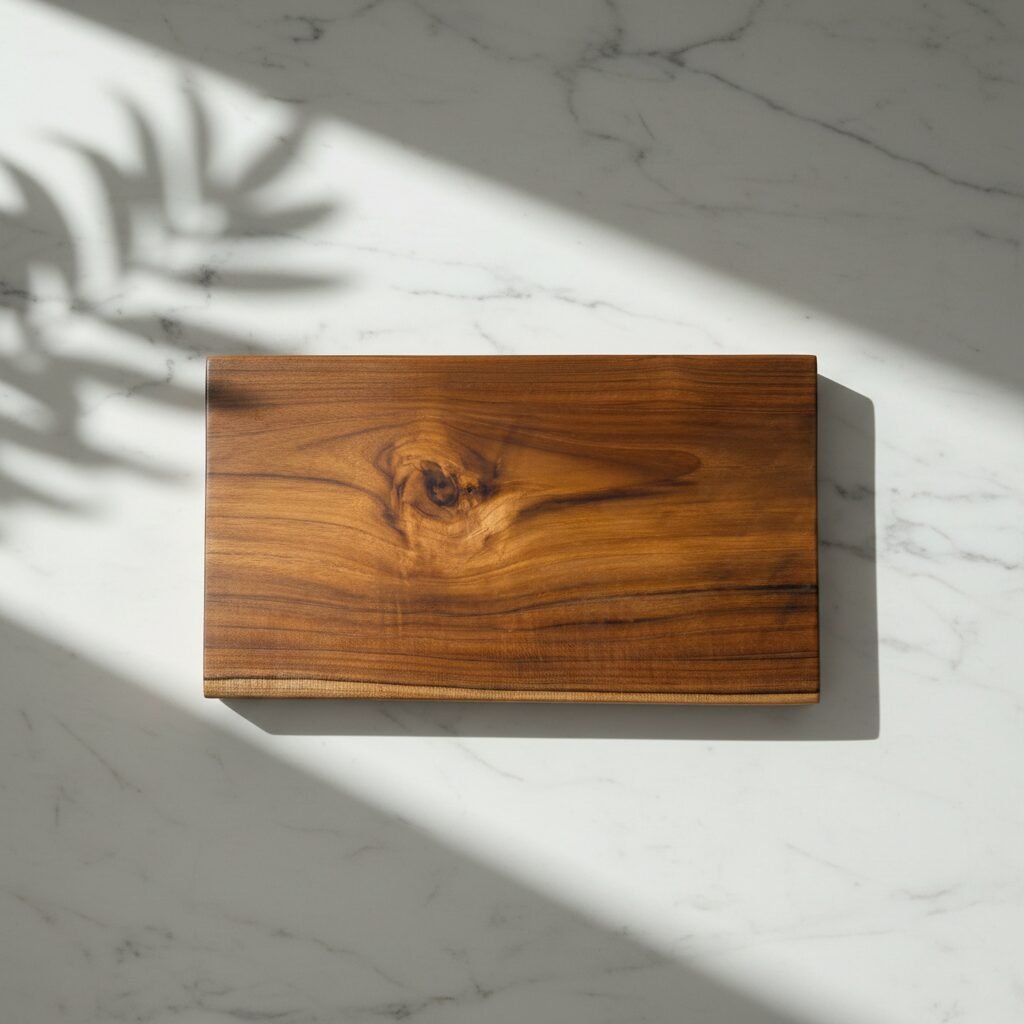
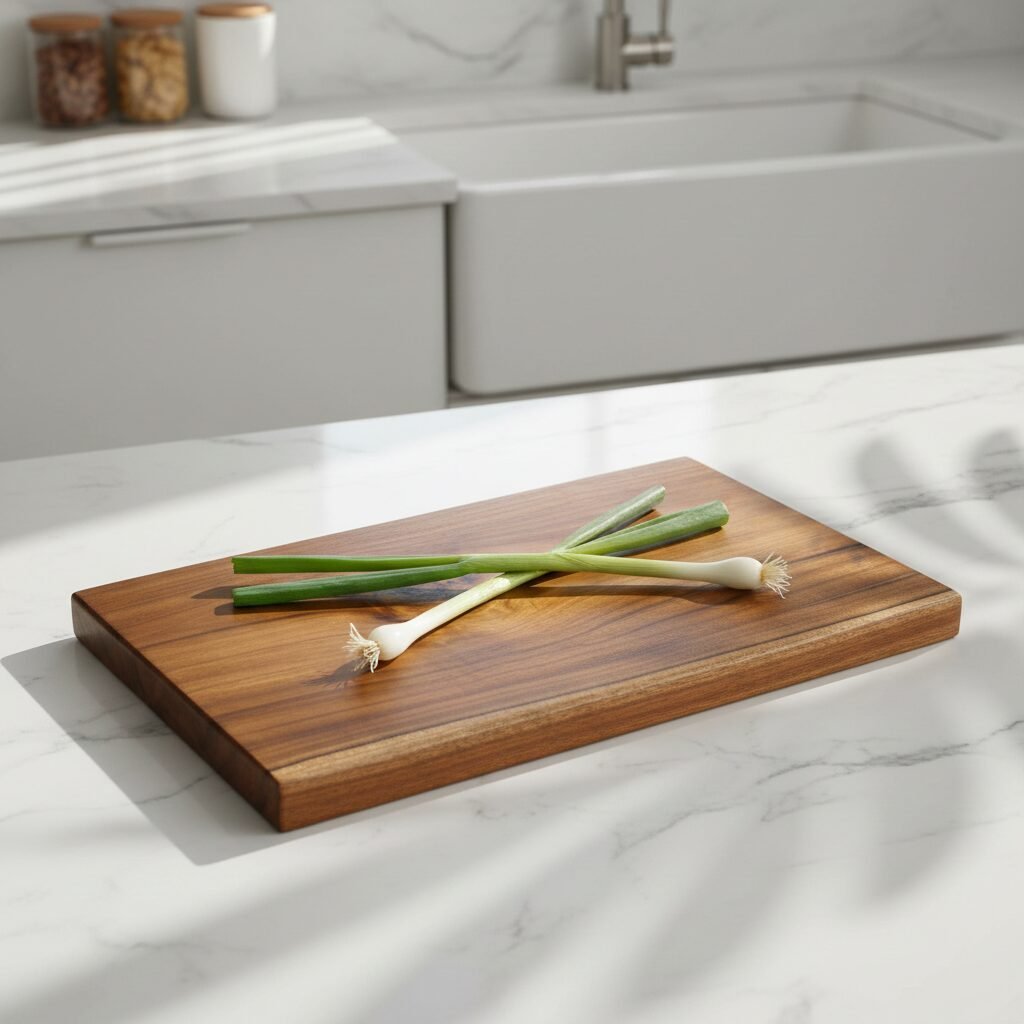
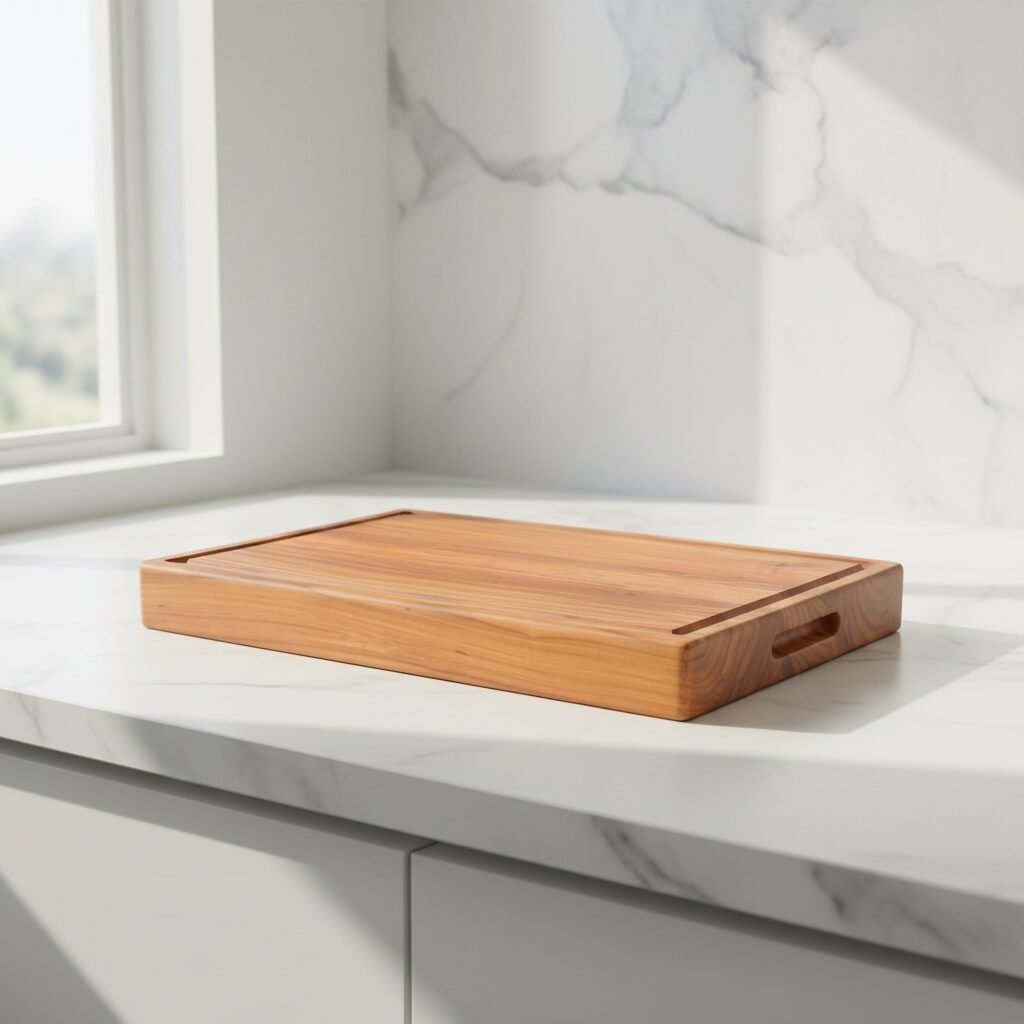
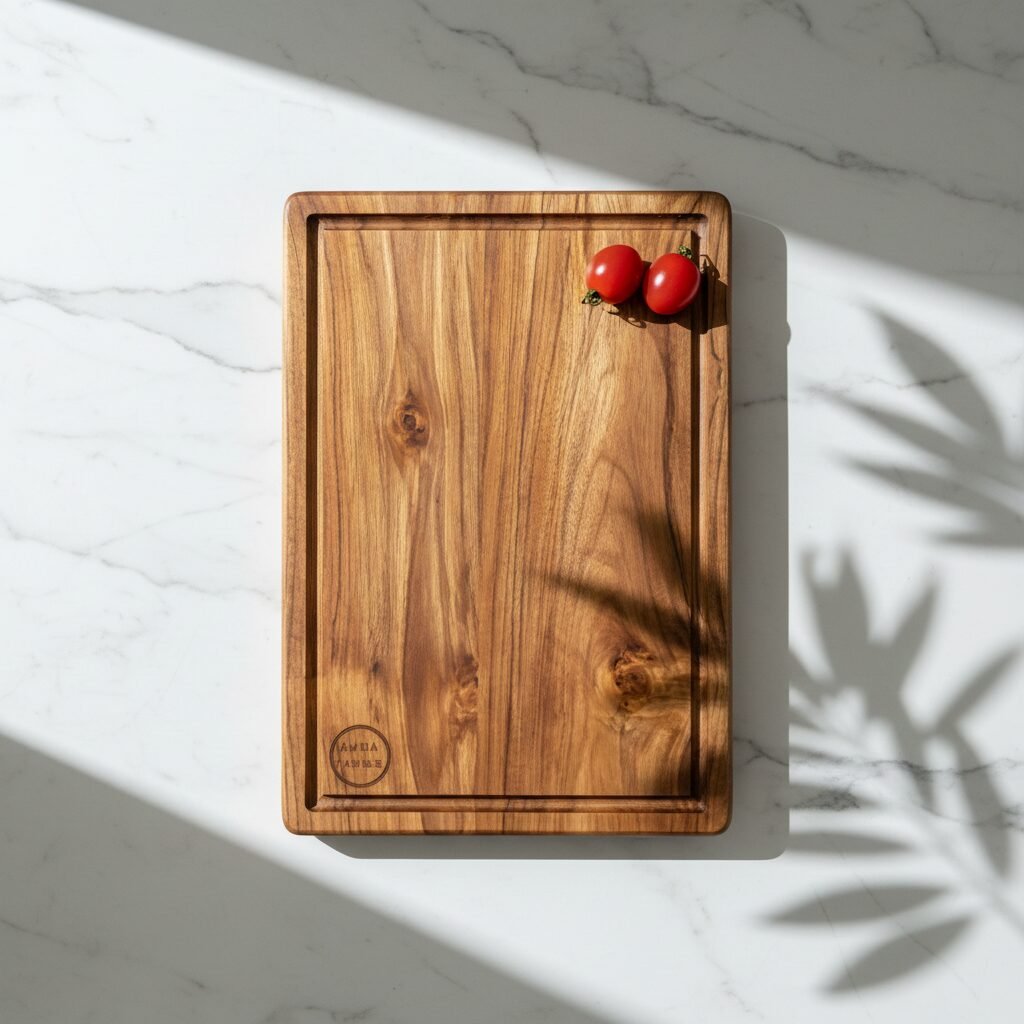
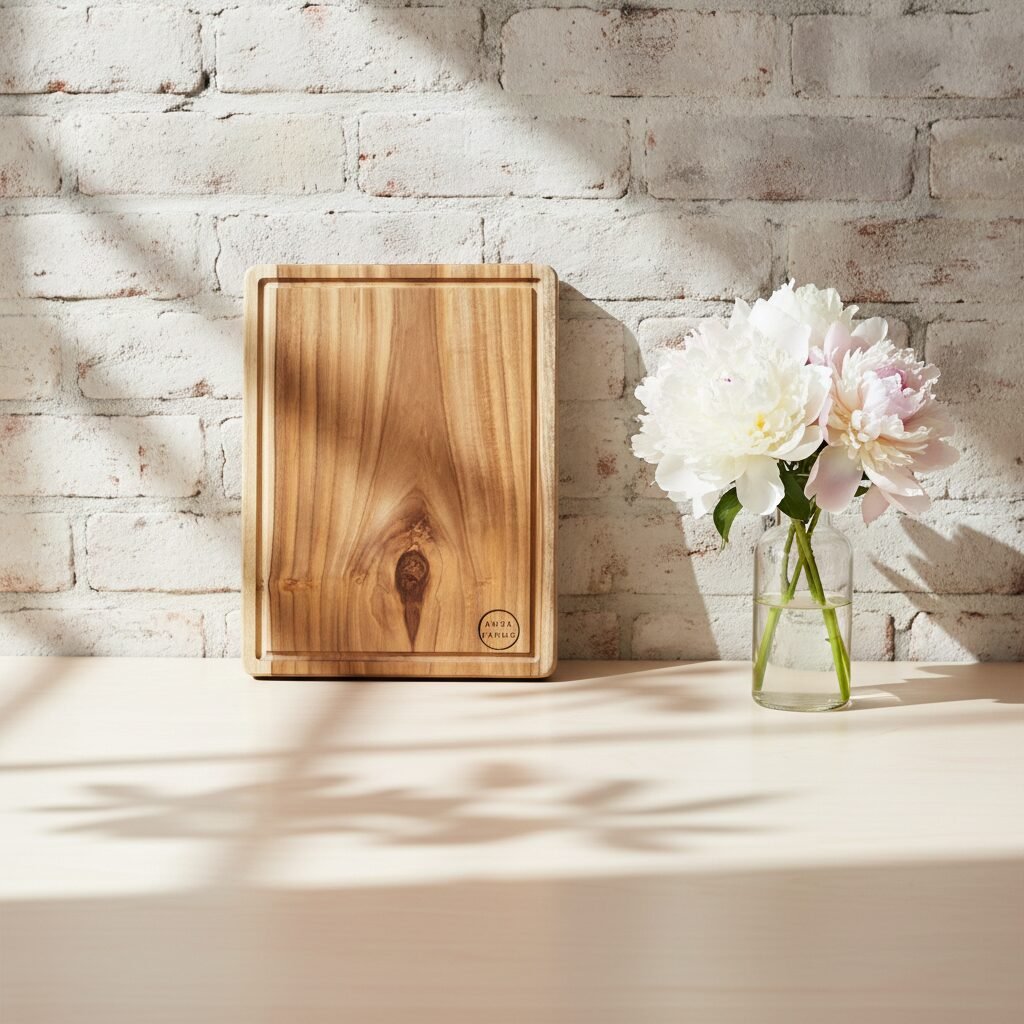
When it comes to wooden chopping boards, teak wood stands in a league of its own. Teak wood chopping baords are durable, food safe and extremely good looking. It’s the James Bond of chopping board material. Favoured by professional chefs and home cooks alike, teak wood has earned its reputation for its looks and performance in a busy kitchen.
Natural oils and resistance to moisture: Teak wood’s key feature is its high natural oil content. The oil acts as a built-in defence from water, germs and bacteria. With lesser water absorption, there is lower chance of cracks and warps. It also is not a favourable space for bacteria without water, making it food safe.
Gentle on knives and long-lasting: Wood is better than plastic, steel, glass and stone when it comes to keeping your knife safe and sharp for longer. Teak wood, though tough, is quite gentle on knives, making it a preferred material among professional chefs in a commercial kitchen. They are also tough enough and low maintenance. They require lesser oiling and a teak wood Chopping board usually lasts years and even decades. these are not the only reasons why teak wood chopping boards are preferred. There are more.
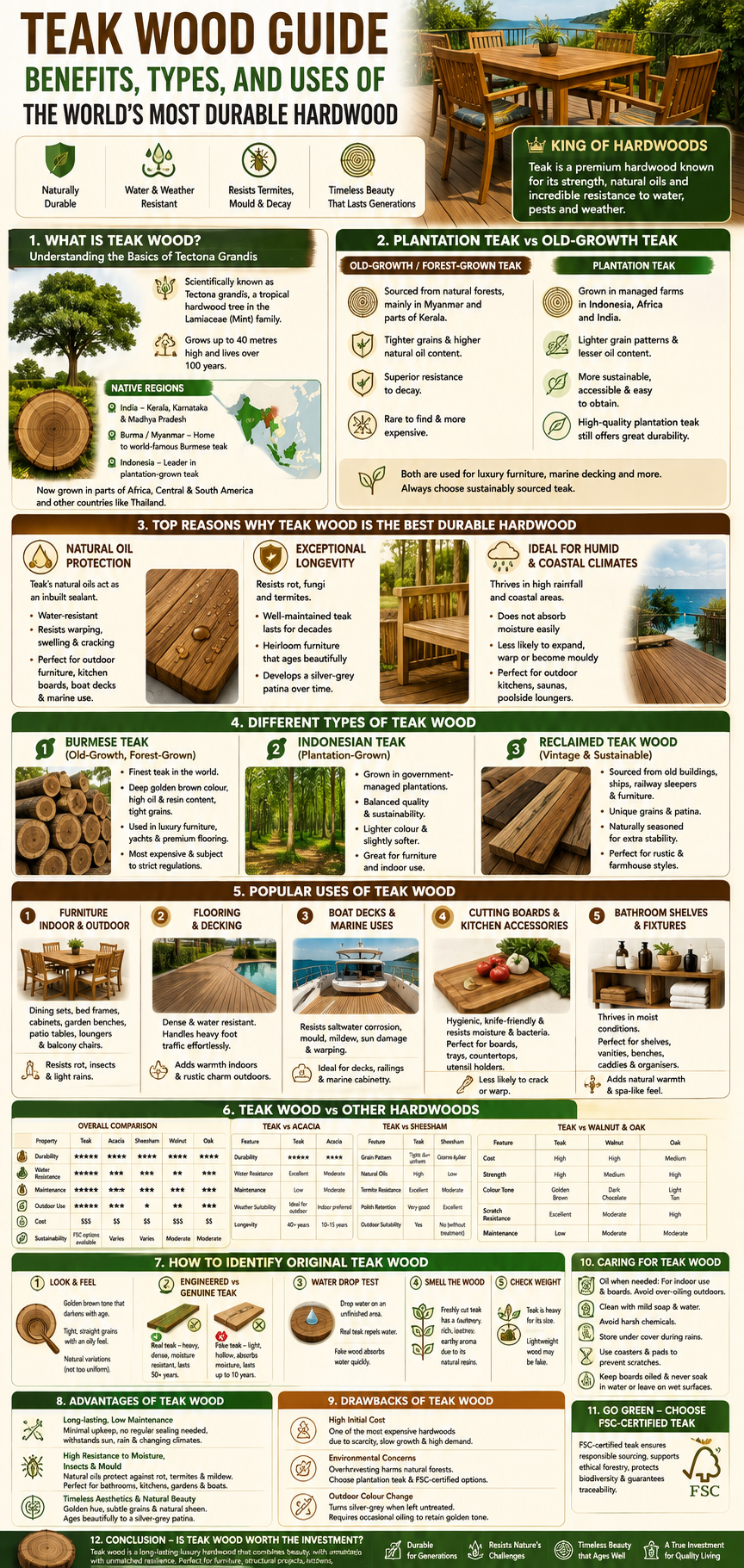
| Feature | Teak Wood | Bamboo | Plastic | Glass | Steel |
|---|---|---|---|---|---|
| Durability | High – oil-rich, long-lasting | Moderate – harder than teak, may crack | Moderate – can warp, wears with time | High – very hard, doesn’t wear easily | High – resistant to wear and heat |
| Knife-Friendliness | Excellent – gentle on blades | Fair – harder than wood, dulls knives | Poor – creates micro abrasions on knives | Very Poor – chips and dulls knife edges | Very Poor – can chip and dull blades |
| Maintenance | Low – needs occasional oiling | Moderate – prone to splitting, hard to oil | Easy – dishwasher safe but scratches easily | Easy – dishwasher safe | Easy – dishwasher safe |
| Hygiene | Good – natural antibacterial oils | Fair – retains moisture, needs drying | Poor – knife cuts can harbour bacteria | Excellent – non-porous | Excellent – non-porous |
| Aesthetic Appeal | High – warm, classic look | Moderate – modern, lighter look | Low – looks cheap, can discolour | Moderate – clear or coloured, cold look | High – sleek, modern |
| Noise When Chopping | Low – soft and quiet | Low to moderate | Low | Very High – loud and clanging | Very High – metallic clang |
| Sustainability | Excellent – renewable, biodegradable | Good – fast-growing but glued | Poor – non-biodegradable | Poor – energy-intensive to make | Poor – high carbon footprint |
| Price Range | Mid to High | Low to Mid | Low | Low to Mid | Mid to High |
| Self-Healing Surface | Yes – end-grain and oil-rich | Slight – limited self-healing | No – retains deep knife grooves | No – does not self-heal | No – scratches remain |
Teak Wood vs Plastic Cutting Boards: Comparing Durability, Safety, and Hygiene
The fight between plastic vs wooden chopping boards boils down to a single factor: price. No other factor puts plastic ahead of wooden chopping boards. Let’s break it down.
Durability over time and susceptibility to cuts: Plastic boards are excellent for the first few weeks or maybe even a month or two. Eventually, the scars show. They are lightweight and prone to warping over time. Sensitive to heat, a plastic board in a kitchen is often going to warp sooner or later. What makes it even worse is the appearance of plastic in a home kitchen. In weeks the scratches become darker and unappealing, often revolting. Teak, on the other hand, is going to stand the test of time. The natural hardiness of the wood prevents scratches. They are tough and can be easily resurfaced, making it as good as new and ready to use.
Plastic boards and bacteria retention – Hygiene and Food Safety: Bacteria’s Favorite Hangout?
Plastic boards were initially considered the safest board and the most hygienic. That’s not really true. Research shows that you eat a credit card-sized chunk of plastic in a year from a chopping board. That may be an overkill but let’s assume that it’s not that much. Even less, it’s still plastic you consume. The health scare does not end there. Plastic boards accumulate bacteria from the scratches and deep gouges over time. These gouges harbor bacteria which cross-contaminate other foods. Plastic is not self-healing. Imagine cutting a piece of meat followed by a loaf of bread on the same board. The bacteria from the raw meat will follow through to your bread and you never know what comes next. Wooden cutting boards, on the other hand, are self-healing and teak wood in particular is highly antibacterial, killing even E. coli or staph in seconds.
Dishwasher compatibility vs teak maintenance: This is one area where teak wood fails. Teak wood is not dishwasher safe. For that matter, no wooden cutting board is dishwasher safe. Plastic has an upper hand in this, but there is a downside to it too. Thin plastic boards often warp with regular dishwasher clean-ups, reducing the life of the board. Teak, on the other hand, requires maintenance. Oiling the teak wood chopping board once a month ensures the board lasts a long time. This is a small price we have to pay to keep the board in good shape for years.
Environmental and health impact: Plastic comes with a range of problems. Apart from the scare of consuming microplastics, they are also a potential food safety disaster waiting to happen. Eventually, they also end up in a landfill or ocean!!
Teak Wood vs Bamboo Cutting Boards: Sustainability, Hardness, and Knife Safety
Bamboo has been the poster boy for sustainable cutting boards. They are considered wood, though technically a grass, are quite sturdy and tough and make a great material for chopping boards. When compared to teak, they have their own sets of benefits, especially being affordable.
Sustainability of bamboo vs teak harvesting: Bamboo is touted as an eco-friendly chopping board. Bamboo grows rapidly and does not require replanting even after harvest. They grow rapidly and are ready to harvest in a year. Being a renewable resource, they are abundant in India. India is the second-largest producer of bamboo. Teak, on the other hand, is slow-growing hardwood which takes decades to grow to its full potential. Thankfully, teak too is now sustainable with plantations made commercial and wide cultivation of teak wood in various parts of the world.
Hardness levels – how they affect knife edges: Teak wood is hard but bamboo is harder. Certain varieties of bamboo are harder than wood. While this may seem appealing to many, it’s not a choice among professionals. Bamboo chopping boards are known to dull knives quickly. Chefs with high-quality knives do not prefer bamboo due to its knife-damaging feature. Teak, on the other hand, is hard enough but soft on knives. They have a balance between too hard a surface that is knife damaging and just right for the knife.
Aesthetic and maintenance needs: In terms of aesthetics, bamboo is lighter in colour and has a uniform striped pattern. They have a clean and modern look, almost minimalistic in nature. Teak, on the other hand, with its rich golden brown hues and the natural wood grain color, adds a touch of elegance and rustic charm to a kitchen. Bamboo boards require more maintenance than teak wood chopping boards. Maintenance for teak wood chopping boards are relatively low.
Teak Wood vs Glass Cutting Boards: Why Knife Lovers Avoid Glass Surfaces
Knife damage and noise issues.
Glass cutting boards are sleek and come in various colors and designs. They look sleek, functional and beautiful. Yet, they fall short in many areas.
Aesthetic appeal vs practicality: Glass boards come in various designs and each design is peculiar and beautiful. They can be custom-made to your liking and they could match your home or lifestyle designs. Teak, on the other hand, offers a luxurious look and is almost irreplaceable with its natural beauty. The audience for both these boards is different. While one is clear cut, the other is an art. A glass board has a big drawback though. They are prone to be slippery. If you have ever washed glass with soap you would know how hard it is to handle a soapy smooth surface. Glass board is prone to breakage and chipping if it does fall. Result is not always pretty.
Slippery surface and food safety: Glass boards do not hold the food steady. They also don’t make the best board on the list as it’s not heavy-duty. Glass boards do not do well with holding food in place. The surface is too smooth and chances of slipping while you chop vegetables or meat is high. This could create accidents. Also, there is a high chance of the glass chipping off. Teak wood, on the other hand, does not have any of these problems, making a teak wood far more superior.
Glass board is not that bad after all. They are scratch-proof and easy to clean, especially in a dishwasher. You need to just be careful. If you are a person who is clumsy, you should avoid glass boards.
Teak Wood vs Granite Cutting Boards: Which One Offers Style Without Sacrificing Functionality?
Granite vs Teak wood chopping boards is definitely not a tough decision to make. Both are unique in their own way but one has more pros than cons. Let’s explore.
Style and kitchen aesthetic value: Granite cutting boards are undeniably BEAUTIFUL. Their natural patterns, polished glossy surface adds a premium high-end look to a countertop and suits modern kitchen designs. They will definitely impress your guests and you can match your countertop with your cutting board and that’s a definite win. Teak by contrast is warm and has a rustic charm. Golden brown honey-like color with rich wood grains and the handcrafted appeal of durable wood makes it a classic for both modern and contemporary kitchens.
Knife damage due to hard surface: Despite the beauty of the granite cutting boards, they fail in terms of knife-friendliness. The hard surface is knife-damaging and not a surface to cut vegetables or meat on with a professional blade. Teak, on the other hand, is gentle and forgiving on the knife edges and reduces hand fatigue. For serious cooks, a teak board wins.
Portability and weight of granite boards: The biggest drawback of a granite board is its weight. With a weight of 5 KG for a standard board, these are heavy. Unless you want to keep the board fixed in one place on your countertop with reduced mobility, the granite board is not a practical kitchen accessory. Risk of damage and injury is real on a granite board. Teak, on the other hand, is lighter and easier to maneuver for kitchens of all sizes.
| Material | Durability | Knife-Friendliness | Maintenance | Hygiene | Aesthetic Appeal | Noise When Chopping | Sustainability | Price Range | Self-Healing Surface |
|---|---|---|---|---|---|---|---|---|---|
| Teak Wood | High | Excellent | Low | Good | High | Low | Excellent | Mid to High | Yes |
| Bamboo | Moderate | Fair | Moderate | Fair | Moderate | Low to moderate | Good | Low to Mid | Slight |
| Plastic | Moderate | Poor | Easy | Poor | Low | Low | Poor | Low | No |
| Glass | High | Very Poor | Easy | Excellent | Moderate | Very High | Poor | Low to Mid | No |
| Steel | High | Very Poor | Easy | Excellent | High | Very High | Poor | Mid to High | No |
| Granite | High | Poor | NA | NA | High | NA | NA | NA | No |
Teak Wood vs Steel Cutting Boards: Sustainability, Hardness, and Knife Safety Compared
Steel is the new kid on the block. Stainless steel cutting boards have started becoming popular, especially among modern minimalist kitchens and commercial kitchens. They are clean, dishwasher safe, and sleek-looking. But how do they fare when compared to teak wood?
Hardness and impact on knife blades:
Steel is extremely hard, and that’s a problem for your knives. Just like glass and granite, steel chopping boards are not knife-friendly. The hard surface dulls the blades faster and can even chip the edges of high-end knives. a Teak wood chopping board, as mentioned before, strikes the right balance—hard enough to endure years of chopping but soft enough to keep knife edges intact.
Hygiene and maintenance:
Steel boards are easy to clean and extremely hygienic. They don’t retain bacteria, and there’s no chance of cracks or warps. However, they are not self-healing, and food particles can stay on the surface longer than expected if not cleaned thoroughly. Teak, on the other hand, with its natural antibacterial properties, is naturally hygienic. Regular oiling and proper cleaning are enough to maintain your teak wood chopping boards for years.
Noise levels and user experience:
Steel boards are noisy. Every chop or cut creates a sharp, clanging sound which can be annoying in a home setting. Teak wood absorbs sound and offers a quieter, more pleasing experience while chopping. For chefs and home cooks who spend a lot of time in the kitchen, this can make a huge difference.
Environmental sustainability:
Steel boards may last long but they are not biodegradable and often come with a higher carbon footprint in manufacturing. Teak wood, especially sustainably sourced plantation teak, is a renewable resource and biodegradable. It gives the added benefit of being eco-conscious while also performing well in the kitchen. understanding the type of teak, the source and how it is acquired plays a crucial role in sustainability.

Things to consider before you purchase Your next cutting board
Purchase decisions based on price is common but price is not an important factor for those who prioritize food safety, Quality and durability. There may be a 100 Reasons to buy a teak wood chopping board but the only good reason we have come across is the overall benefits of teak wood itself. Mango wood , Tamarind and Acacia are good for cutting boards but falls short in terms of features and safety when compared to teak . the closest wood for chopping boards near teak is acacia. The guide to teak wood helps you understand the benefits of teak wood and why it is one of the most preferred wood, not just in India, but internationally. it is important to understand that teak wood chopping boards dont give you the durability of steel or lower maintenance that glass, stone or even plastic boards provide. but they are good, long lasting and if cared for , is one of the best wooden chopping board you will ever purchase.
Related Topics
Is Teak Wood Safe for Food Use – Facts and Myths on Teak Wood Utensils
When sourced properly and maintained, teak wood is a food-safe material for specific kitchenware. With its high natural oil content, teak wood provides antimicrobial properties and inhibits bacterial growth. This makes teak wood a hygienic choice over plastic. It is scientifically proven to be food-safe and, traditionally used since ages, teak wood is one of…
Reasons Why Wooden Chopping Boards Are Better Than Plastic
Plastic has been the preferred choice for chopping vegetables and meat in the past decade. Many users have had complaints about plastic chopping boards, yet they go back to plastic boards time and again. Understanding why wooden cutting boards are better than plastic chopping boards and where they excel will give you a clear perspective…
Essential Facts You Must Know Before Buying a Teak Wood Chopping Board
A teak wood chopping board will last decades. But it’s not about durability alone. Teak wood chopping boards are an investment and just like any other investment, you need to take care of your cutting board too. Regular maintenance, oiling and addressing issues related to the board’s wear and tear should be taken care of…
Best Uses of Teak Wood: Common and Unique Applications That Make It the King of Hardwoods
Teak wood is considered a valuable and versatile hardwood, prized for its durability and natural oil and water resistance apart from its beautiful grain patterns. Teak wood is considered a versatile wood which is used both in indoor and outdoor applications where strength, longevity and appearance matter. Apart from furniture, Teak wood has some of…
What to look for when purchasing a teak wood cutting board and how to identify teak wood
Most people are not experts in wood. They believe the wood they purchase is genuine, but this may not be the case. Even with genuine teak, the origin of the wood is important. Apart from the origin, the quality or the grade plays a major role in the life of a teak wood cutting board.…
Why Tamarind Wood Cutting Boards For Meat is Preferred Compared to Teak Chopping Boards
Teak is a tough wood and it is beautiful too. Then why is tamarind wood chopping boards preferred choice in commercial butcher shops compared to teak? Ever wondered why teak is not used for cutting meat in a commercial butcher shop? There are multiple reasons why butchers prefer tamarind wood and not teak, even though…
