
A lot of people ask me why Amra Farms teak wood cutting boards are so expensive. In comparison to many other brands, Amra Farms teak wood chopping boards seem to be 3 or even 4 times more expensive and the size seems to be the same. This article explains why our teak wood cutting boards are more expensive and why we are unique too.
Before we begin comparing prices, let me put out a few facts. This will help you understand the pricing of teak wood cutting boards in general and what is sold in the market. To begin with, there aren’t a lot of Teak wood “Single Block” cutting boards in the market that are more than 9 inches wide. Amra Farms takes pride in the fact that we provide 8 inch, 10 inch and 12 inch single block cutting boards at the best price. Apart from the regular sized cutting boards, we also have a wide range of Live edge cutting boards collection too. But then is it the best price?
Shop Wooden Chopping boards
Single Block Chopping Board 14×7×.75 Inch – Rectangular Teak Wood Edge Grain Cutting Board
Original price was: ₹999.00.₹599.00Current price is: ₹599.00.Small Premium Single Block Teak Wood Bar Chopping Board 14×8 x1 inch – Wooden Cutting Board
Original price was: ₹2,899.00.₹1,399.00Current price is: ₹1,399.00.Large Single Block Teak Wood Chopping Board 15×9×1 Inch – Rectangular Edge Grain Cutting Board
Original price was: ₹3,499.00.₹1,999.00Current price is: ₹1,999.00.Teak Wood Carving Board 10×16×1 Inch – Solid Cutting Board with Juice Grooves | Craft Series
Original price was: ₹3,399.00.₹1,999.00Current price is: ₹1,999.00.Teak Wood Chopping board | Single Block Teak Wood 10×16×1 Inch – Rectangular Edge Grain Cutting Board
Original price was: ₹3,999.00.₹2,699.00Current price is: ₹2,699.00.Large Single Block Teak Wood Chopping Board 18×12×1 Inch – Wooden Cutting Board
Original price was: ₹4,999.00.₹3,379.00Current price is: ₹3,379.00.
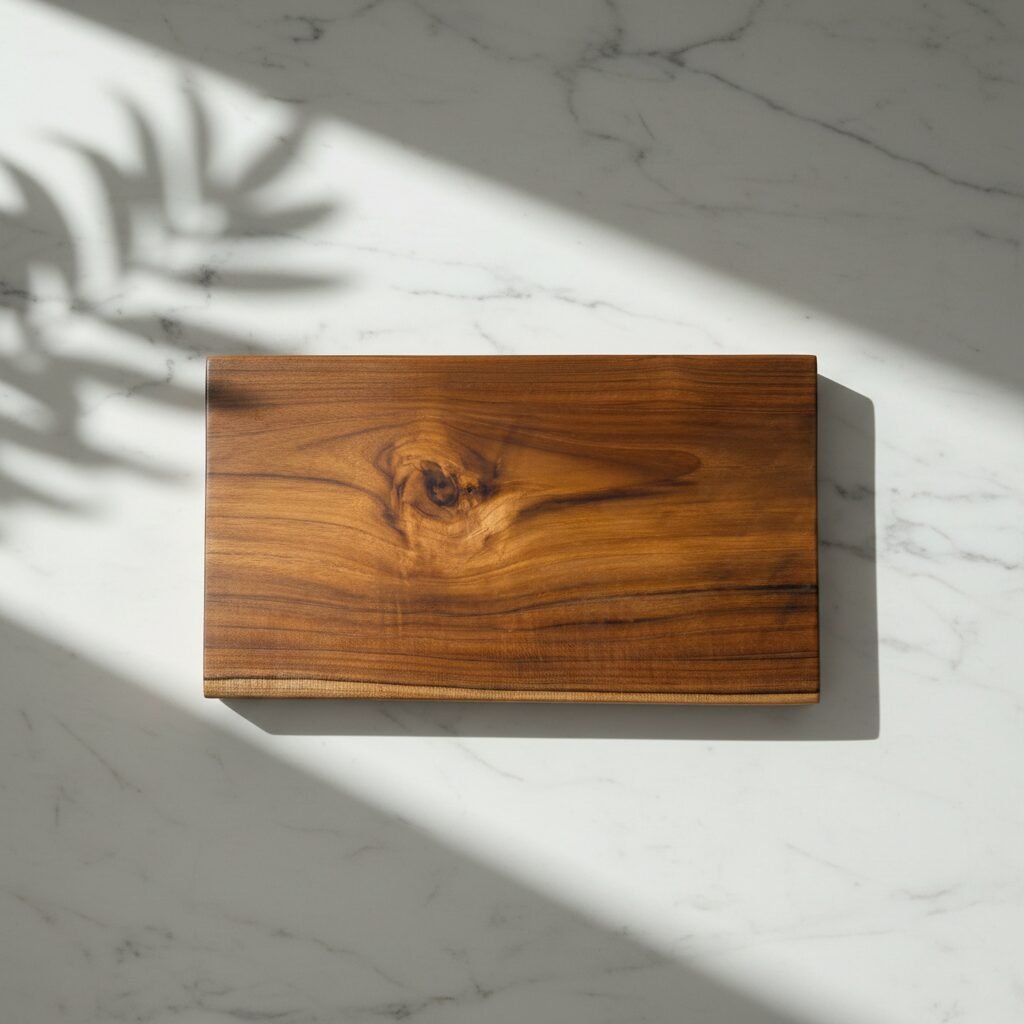
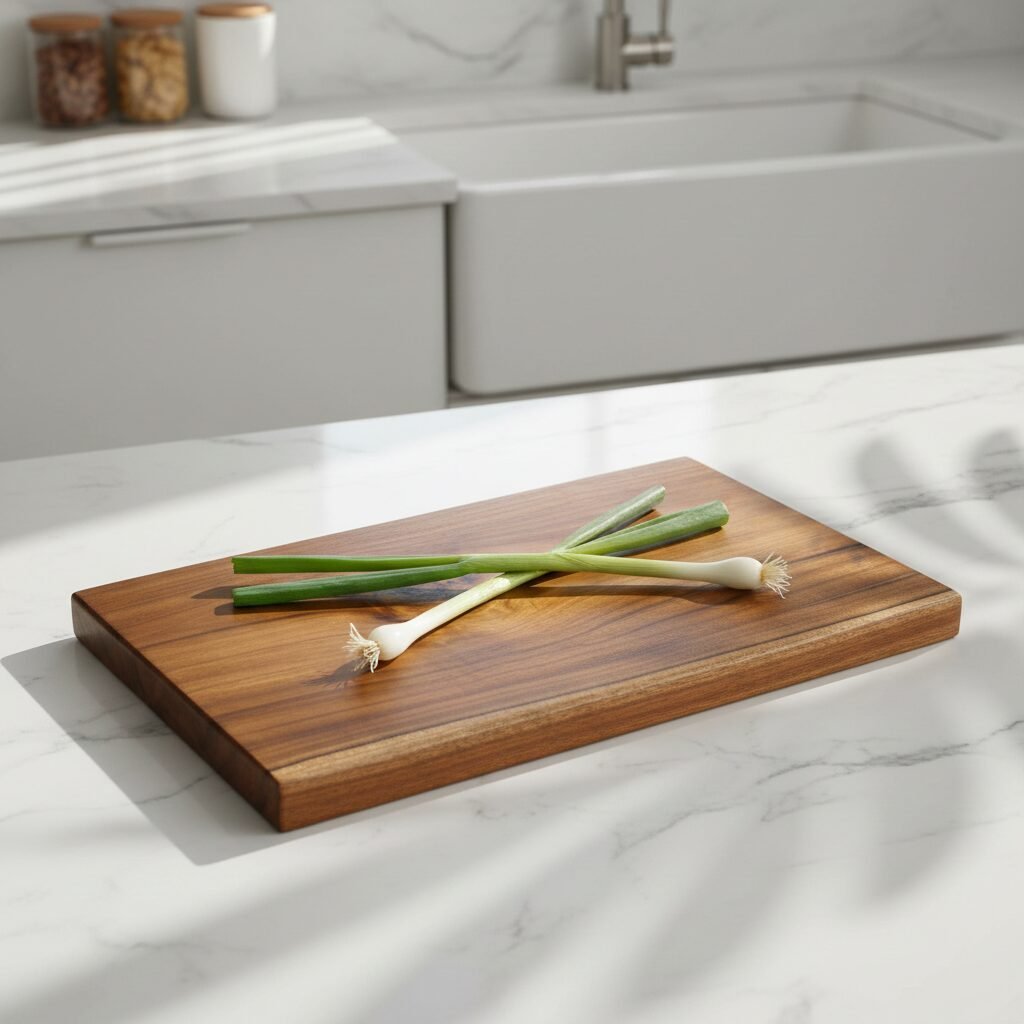
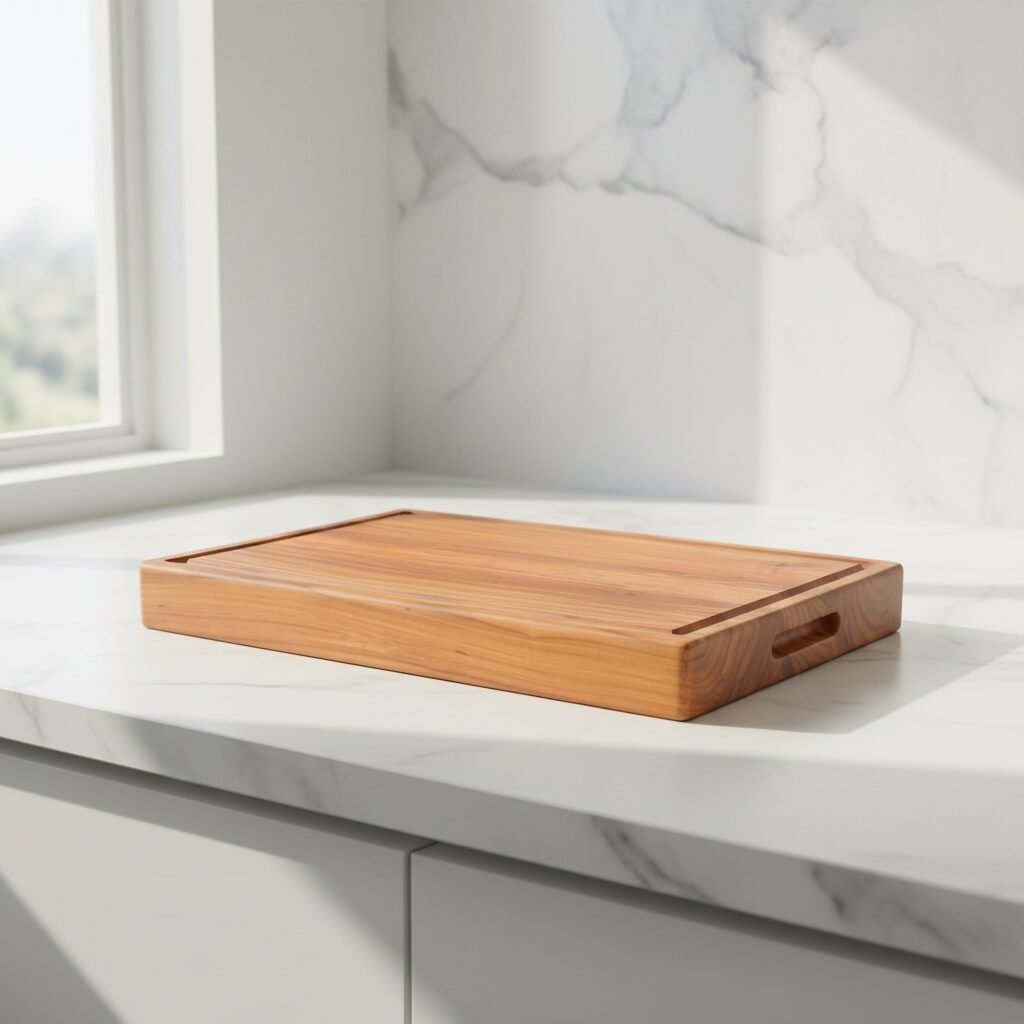
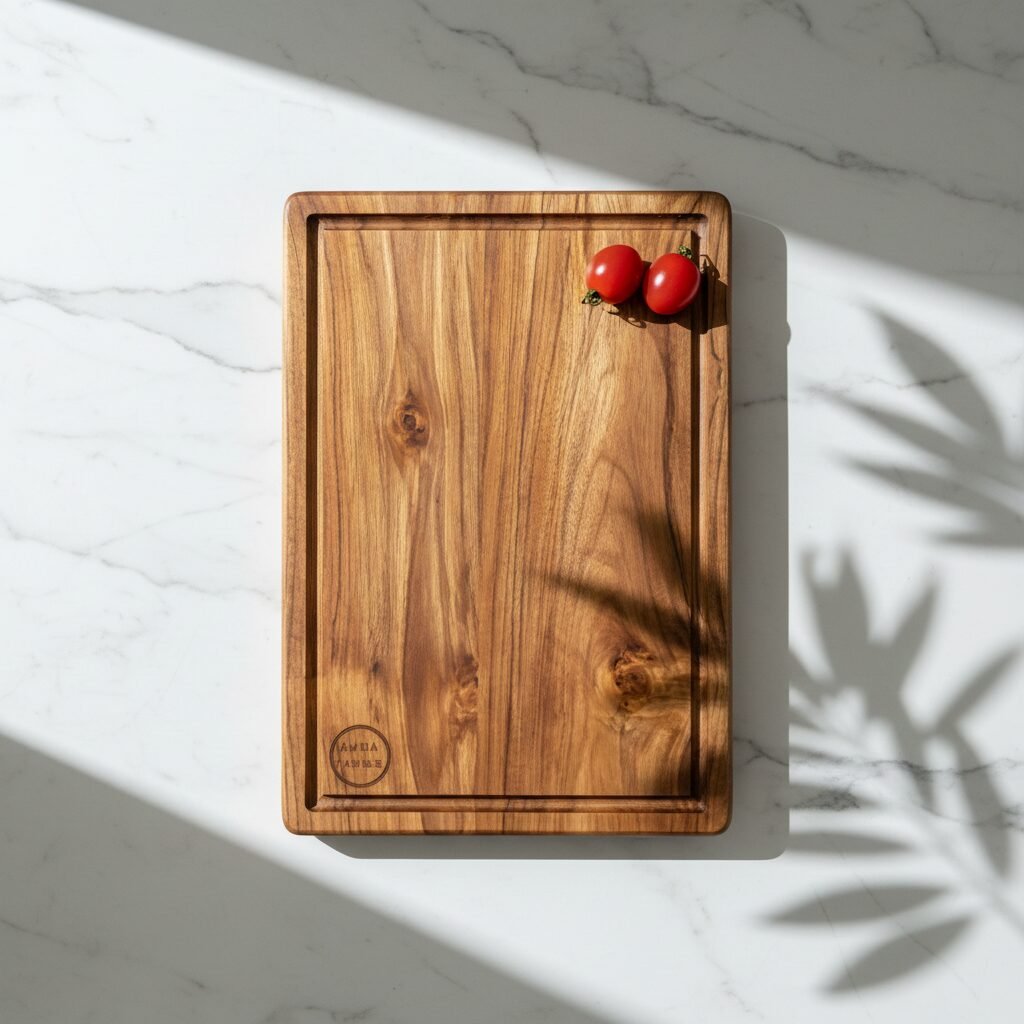
Understanding Teak wood cutting boards and its pricing
Teak wood cutting boards in the market are usually not single block. Almost all teak wood cutting boards, spare a few, are joint wood cutting boards made from teak. But as if that is not enough, most of the joint wood boards are made from Grade B or even Grade C teak. Understanding teak wood boards is all about understanding the wood source, the age of the tree and the grade.
Understanding Teak wood and its features
Wood grading is a complex topic and requires understanding everything from quality, age, source and more. Teak wood is in general expensive, but if you look around you will find teak wood for 1000 Rs per cubic feet and another source selling it for 12500 per cubic feet. What’s the difference and why the huge difference?
Age of the tree: A teak wood tree grows very slow. A tree which is 40 inches in circumference takes roughly 35-40 years to get there. During the time of growth, some trees (approximately 75% of them) are affected by stem rot, diseases and defects, due to which the wood is not graded to be the best. Approximately 30% of the wood which is not graded the best falls in Grade B category. These are often woods with knots and have a higher sapwood percentage than that of Grade A wood. The remaining wood is usually cut down due to poor quality and used where allowed.
Take into consideration a few factors. A teak wood tree which is cut down after 40 years is 40 years of effort .Approximately 8 to 10 cubic feet of wood or less than 10% of the wood is more than 12 inches wide in the entire tree . Less than 30% of the wood is more than 10 inches wide. While it’s easier to acquire wood which is 8 inches, it’s rare to find wood which is 12 inches wide.
There is an increased demand for wood which is wider. There is limited quantity of teak wood which is 12 inches thick. The teak wood you acquire which is 12 inches wide comes from a tree which is 40, 50 or even 100 years old. That is valuable. to understand teak well, we suggest you read the teak wood guide which explores the wood in detail.
Why is the teak wood sold cheap then?
Buying a wooden chopping board is complicated with so many options of wood. But it gets even complicated when you have to go through types of chopping boards even after you choose the wood. Age of the wood is the primary factor in teak wood pricing. Smaller wood means shorter age. A teak wood which is 5-12 years old will have a circumference of 10-15 inches. When cut, the largest planks are 4-5 inches wide. This wood is usually cheap because it is not dense and also the age of the wood is very less. These woods tend to decay faster than wood which is older and dense. if you are wondering what happens to smaller wood then rest assured, it does not go to waste. There are a lot of other things that can be done with wood from younger trees . The heartwood of younger trees are often used for various crafts and smaller furnitures like Wooden door mats, Wooden foot rests, Belans and more.
Now look at a wooden chopping board sold in the market today. Most teak wood chopping board brands will sell a board which is joint and each of the planks joint together are not more than 3-4 inches wide.
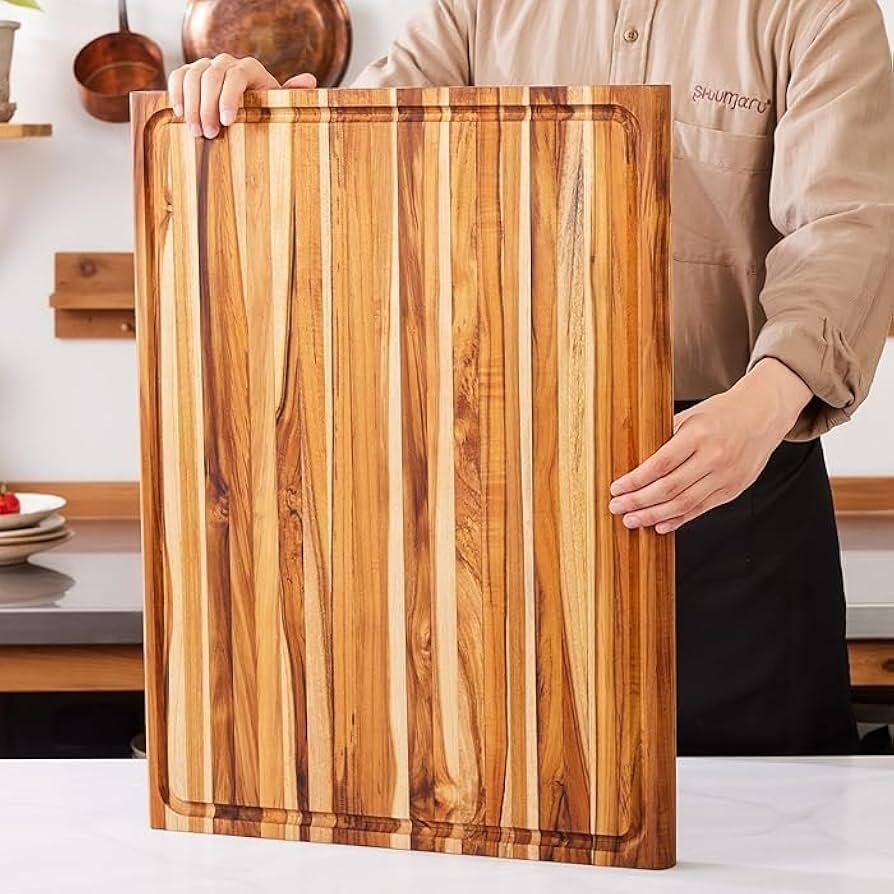
A Grade C Teak With more than 90% Sapwood. You can see that the wood has more white areas than dark hardwood.
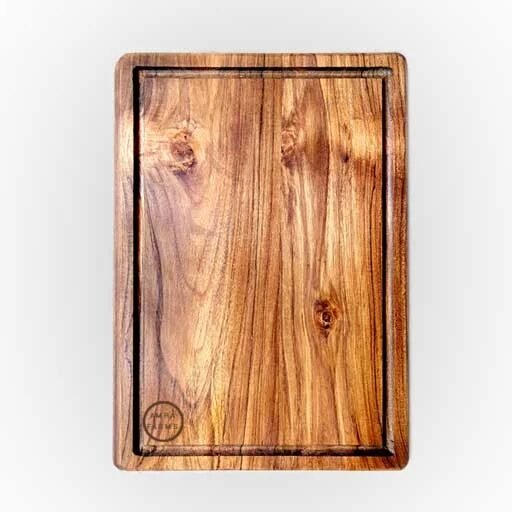
Grade B teak with 100% Heartwood and no sapwood at all. The wood has knots in them which makes it a Grade B teak wood.
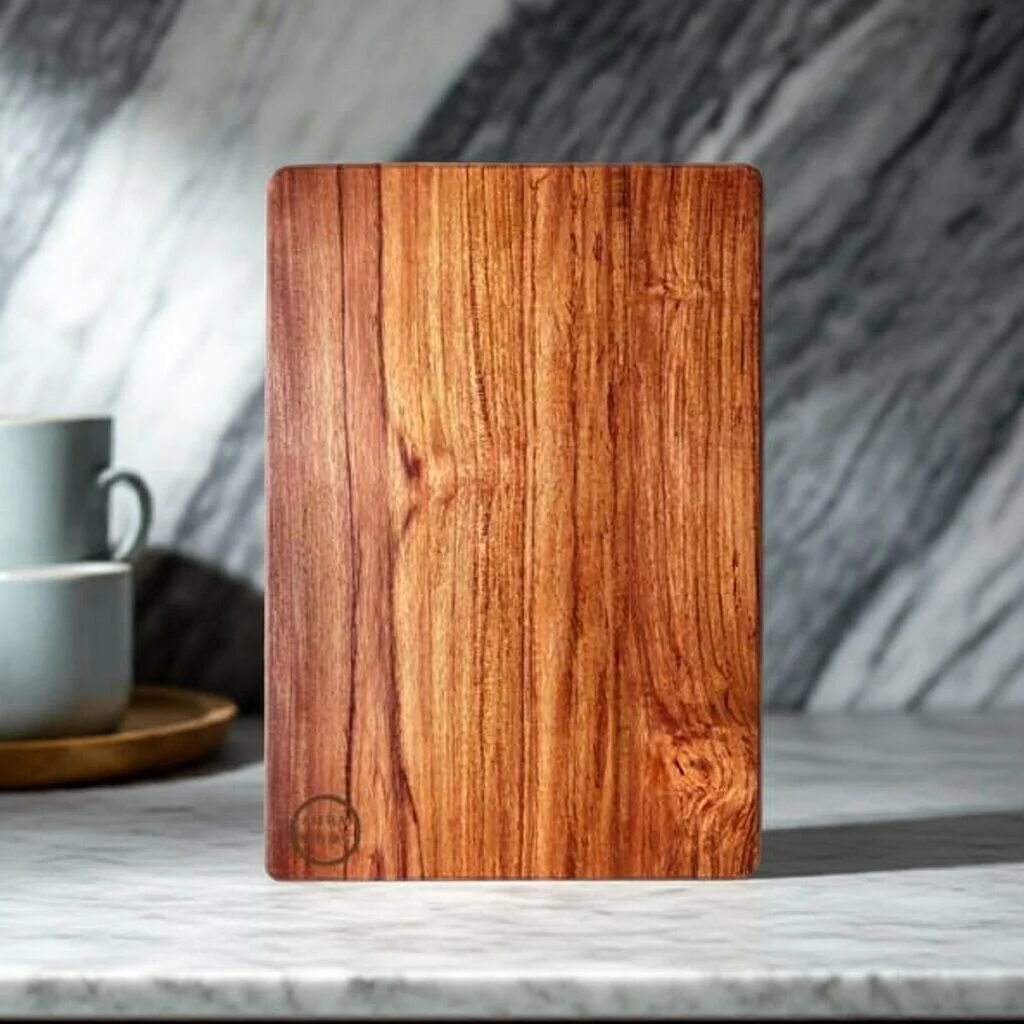
Grade A tea with no knots straight grain and a single block of wood which is 12 inches wide.
The second most important factor is grade of teak wood
A Grade A teak is high quality dense heartwood, with rich oil straight grains. few knots and even color. These woods could range anywhere between 4500 – 9000 Rs per cubic feet. Grade B teak is medium quality, lighter color, more knots and there is a lot of grain variations. Since the age of the tree is lesser, there is relatively lesser oil content. These are woods best used for interiors and indoor furniture. They are moderately priced between 2000-5000 Rs per cubic feet depending on location and where it is sourced from. Malabar teak is often more expensive than Valsadi teak because of the high oil content. Even a Grade B teak will be as expensive as a Grade A Valsadi teak in most cases. Grade C teak is what is usually used in joint wood cutting boards. They are lower quality and contain more sapwood, have lesser natural oil content and the color is uneven. Some furniture users use Grade C teak to sell cheap furniture made from teak by masking them with paint and varnish. This is also the same wood used in most joint wood cutting boards today. The price? Less than 2000 Rs per cubic feet and it could go as low as 600 Rs per cubic feet.
The grade of teak wood plays a major role in the durability of your wooden cutting boards too. Grade A teak will last 40 or even 50 years. Some cutting boards made from Grade A teak last up to 80 years with proper care and regular resurfacing. A Grade B teak is less dense and the life of the board will go down by 50%. Expect your cutting board to last 10-20 years. And a Grade C teak wood will last not more than 10 years. Most joint wood boards will last 5 years tops before it splits, cracks and breaks down. Most products which are in the craft series like Pizza boards and charcuterie boards are often crafted from joint wood.
So next time you choose a teak wood cutting board look for the width of the plank. Joint wood boards are not bad. Ensure the wood has more heartwood than sapwood. The colors should be even and you should see lesser white and more brown and golden hues on your board.
For the best quality board, choose a teak wood single block chopping board. These are the best boards. It does not matter what size. Ensure the thickness is at least 1 inch and is made from a single block of teak wood. These are some of the facts about teak wood chopping boards. The choice is completely dependent on your requirement. Be sure to purchase a teak wood chopping board with handle when you buy one. these boards are heavy and will require an engraved handle or an external handle .
