
The most common tools in the kitchen are the most underrated ones. Think about it. We use a spoon, a spatula or a knife for instance and think it’s just another tool. The chopping board is one of the few that’s used daily but we always take it for granted. Much more than the other tools. We believe that a chopping board can be done without! Well in some cases it is true. A chopping board is just another tool to add convenience to your kitchen and the task of chopping vegetables or meat.
But is it all that is to a chopping board! Let’s see what happens without a chopping board in a kitchen. You are forced to cut food on a countertop. Small vegetables can be cut with your hands and a knife but that could lead to injury or scratch marks on your skin. You are left to clean the countertop which is a larger surface than a chopping board making it dirty over time. Also, the chance of damaging your countertop is much higher when you cut on them, with water leakage, poor hygiene etc.
Kitchen cutting boards make your life easy. It’s easier to clean, makes the task of chopping vegetables much easier and is definitely a tool every home kitchen should have. But what kind of cutting boards are good for home use? When it comes to wooden vegetable chopping boards there are a wide range of woods in the market. Starting from bamboo which is technically not wood but advertised so to soft wood and hardwood like teak. The wide varieties of wood is confusing to many consumers especially when it has safety concerns. Not all wood are good for cutting boards. Some woods are toxic. Others have health benefits. Some are long-lasting while others are short-lived. Let’s explore the varieties of wooden cutting boards and why they make the best kitchen tools.
Shop Wooden Chopping boards
Single Block Chopping Board 14×7×.75 Inch – Rectangular Teak Wood Edge Grain Cutting Board
Original price was: ₹999.00.₹499.00Current price is: ₹499.00.Small Premium Single Block Teak Wood Bar Chopping Board 14×8 x1 inch – Wooden Cutting Board
Original price was: ₹2,899.00.₹1,399.00Current price is: ₹1,399.00.Medium Premium Single Block Tamarind Wood Chopping Board 10×16×1.5 Inch – PuliMutti Collection
Original price was: ₹2,479.00.₹1,499.00Current price is: ₹1,499.00.Teak Wood Carving Board 10×16×1 Inch – Solid Cutting Board with Juice Grooves | Craft Series
Original price was: ₹3,399.00.₹1,999.00Current price is: ₹1,999.00.Teak Wood Chopping board | Single Block Teak Wood 10×16×1 Inch – Rectangular Edge Grain Cutting Board
Original price was: ₹3,999.00.₹2,699.00Current price is: ₹2,699.00.Neem Wood Chopping Board with Juice Groove 10×16×1 Inch – Wooden Cutting Board
Original price was: ₹1,999.00.₹1,499.00Current price is: ₹1,499.00.
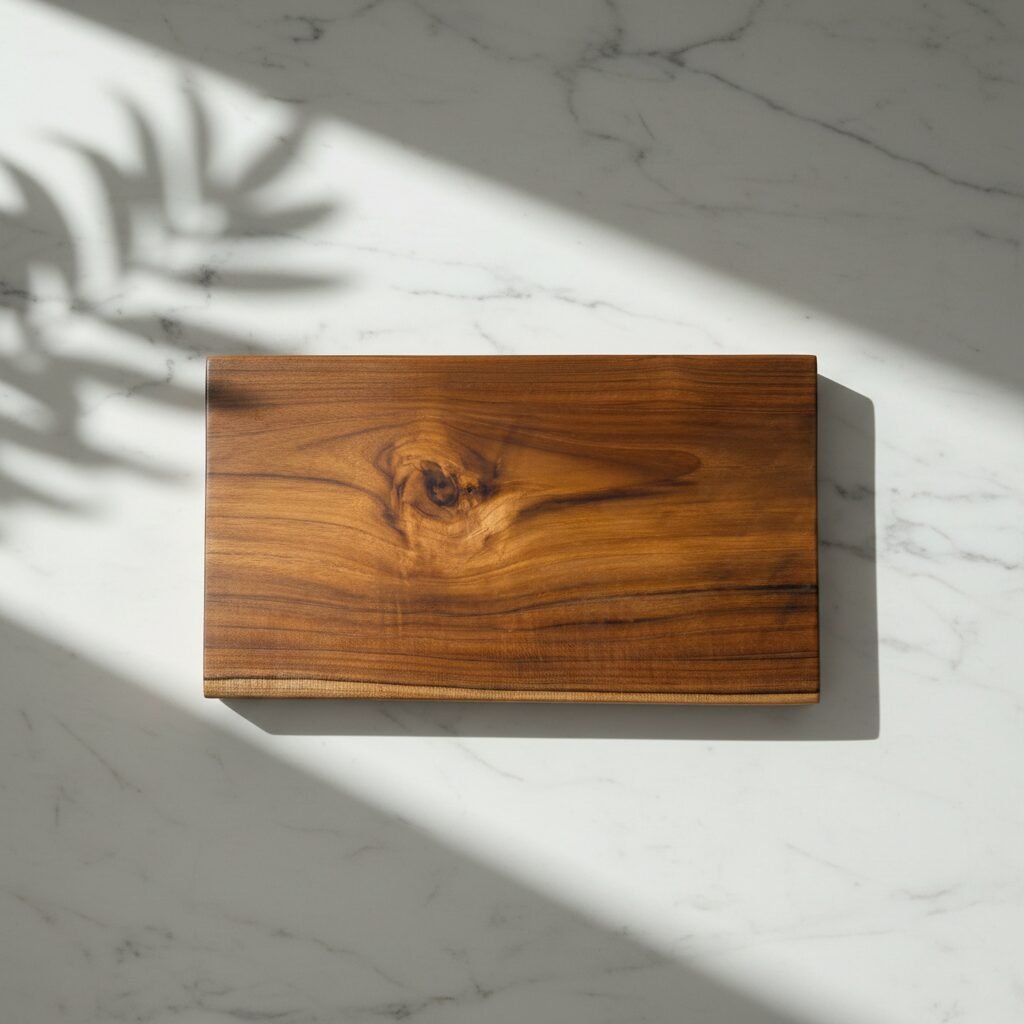
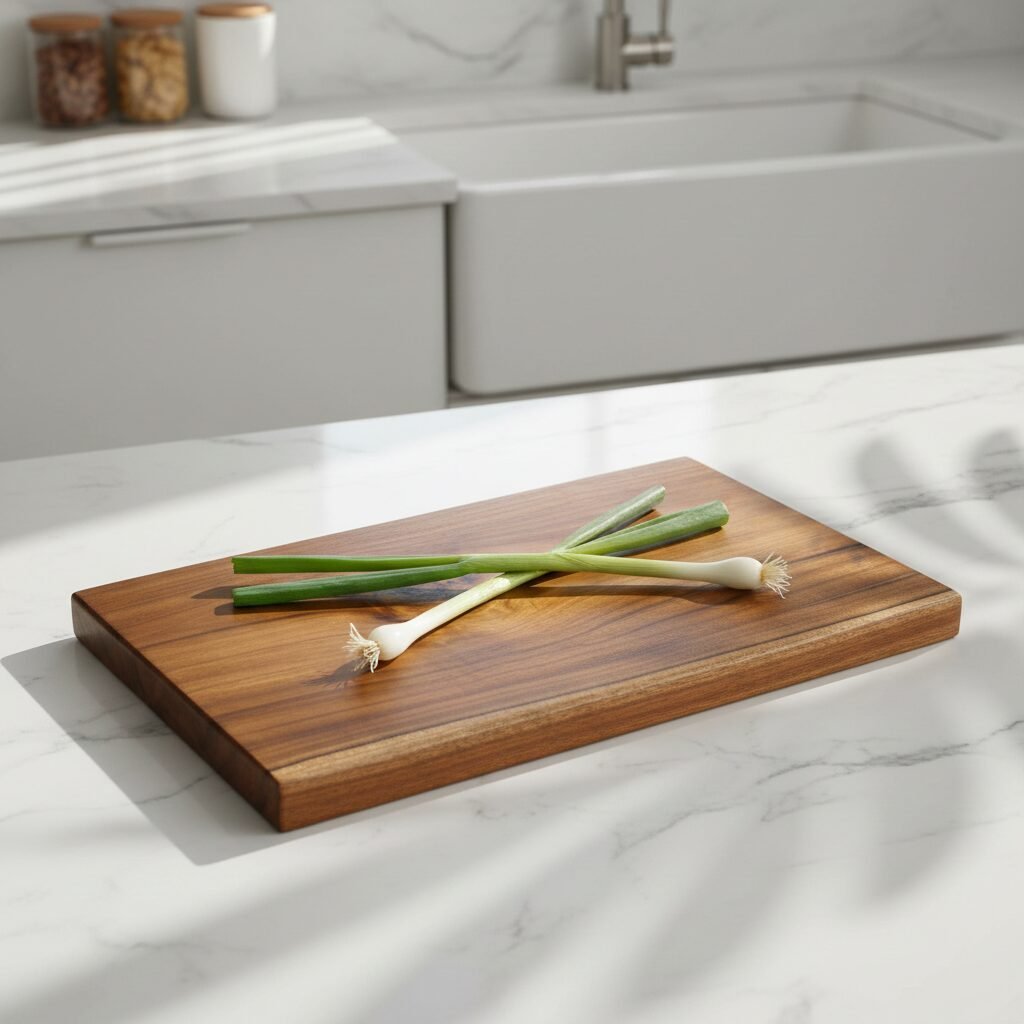
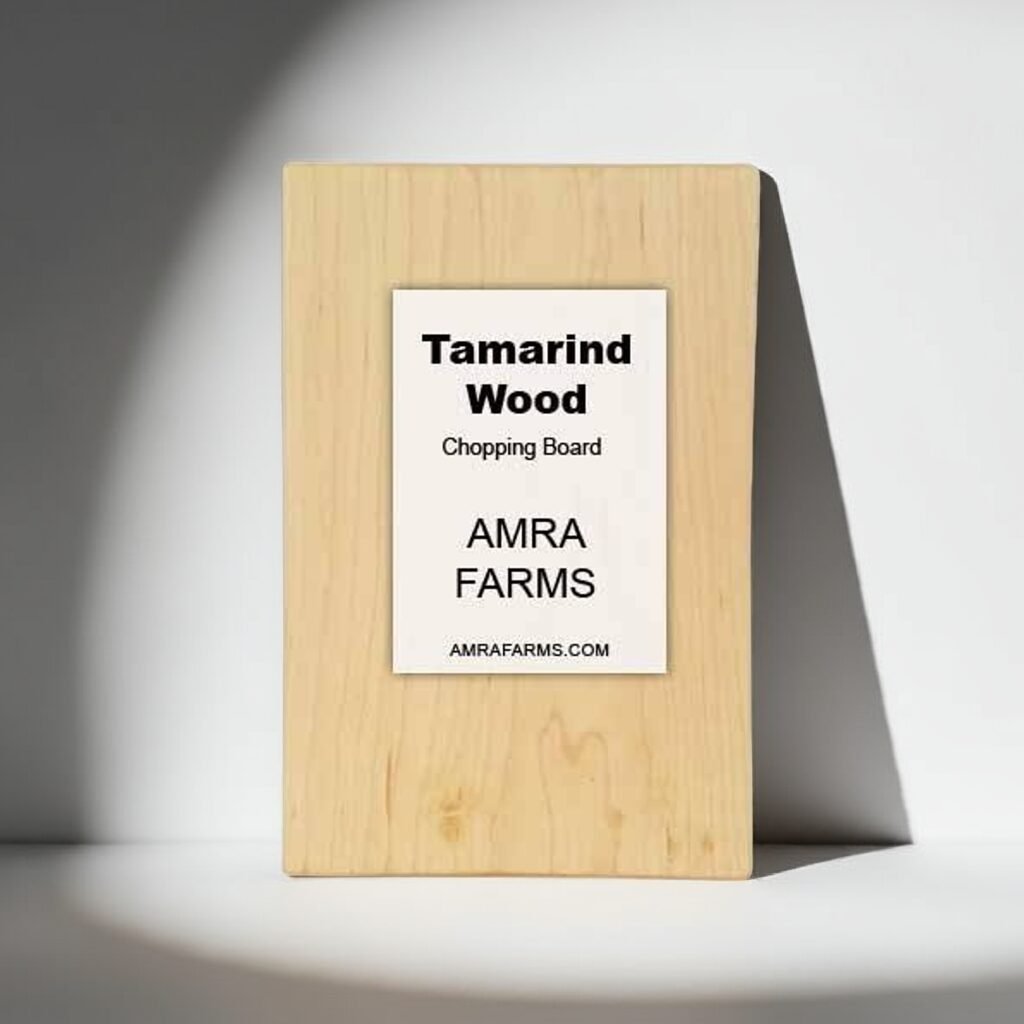
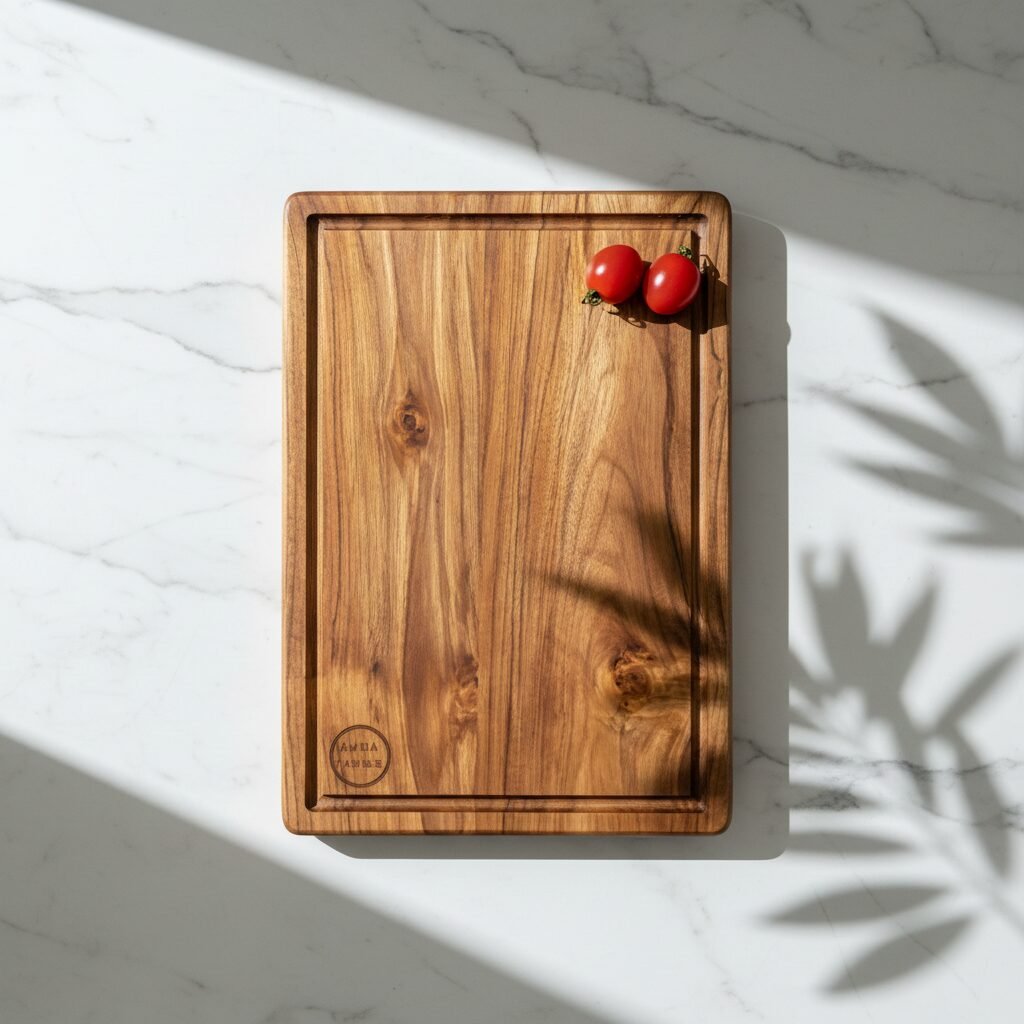
Wooden chopping boards offer Natural Durability and Longevity
In India, woods are different from most European and American countries. We have a wide variety of wood from walnut to teak and acacia. The trees grow depending on soil condition and weather. Kerala, for instance, has some of the best teak. The Himalayan region or the north-east has the best walnut wood in India. Acacia is available in various parts of the country but mostly in the central and eastern region. So when we discuss hardwood options, the variety of hardwood chopping boards available in India can be quite wide. Here are some of the most common woods available in India suitable for cutting boards:
Mango Wood, Tamarind Wood, Teak, Rosewood, Acacia, Mango Wood, Mahogany Rosewood
While each of these woods are good for cutting boards, some are more exquisite and may cost a lot. Rosewood, for instance, is not widely available and harvesting is restricted by the government in most states making it a prized product. Teak wood, though controlled, is available widely but may be expensive. Acacia, mango and tamarind wood are widely available due to its sustainable nature.
Wood ages well – Aging and Seasoning of Wood
Not all wood are same. Though you may be purchasing teak wood at the premium price, the quality of the wood depends on the age. The older the tree, the more expensive the wood is. This is because the heartwood of the tree is the strongest and it is the heartwood that takes time. Heartwood is also the part which has more grains, is dense and durable. Teak, for instance, is a wood which will develop its grains from the 10th year. A wood that is less than 10 years old will often have more white, which is technically called the sapwood. Sapwood is relatively softer and has lesser value. Heartwood is more dense, has rich grains and is best suited for furniture and all other purposes, including cutting boards and chopping boards. Hardwood cutting boards made from teak should be checked for minimum white, maximum grains. This applies to acacia, and other woods which are rich in grains.
Apart from the age of the tree, curing also is important. Each wood is cured naturally and should be done so depending on the wood. Mango wood should be cut and cured for at least 6 weeks while teak should be cured for at least 6 months. The time spent on curing the wood makes for the rich grains, naturally and also brings out its original strength. With curing, most of the moisture content in the wood is removed. Doing this naturally ensures there is minimal crack in the wood and is more durable.
Wooden cutting boards are Gentle on Knives
If you have a collection of expensive knives you would want to keep them sharp for a longer time. Dull knives make for poor cutting but what’s worse is a frequently dulling knife often ends up being sharpened way too often, reducing the life of a good knife. The culprit? Your cutting boards. Steel and glass cutting boards are terrible choices for people who love their knives. They are too hard for a sharp edge and will dull your knives faster. Plastic is a good choice but they are prone to deep scars with a sharp knife and compared to wooden cutting boards, plastic is relatively bad. Wooden vegetable cutting boards are not all that good either. It’s completely on the construction of the wooden cutting board. That’s why you will see top chefs with expensive knives use a knife-friendly cutting surface, an end grain cutting board. Edge grain cutting boards and bamboo are equally bad for your knife.
Wood is More Hygienic Than Plastic When Maintained Properly
For a decade people believed that plastic boards were more hygienic because it could be cleaned more thoroughly. Kitchen cutting boards made from wood were considered inferior, prone to absorb water and juice from food and cross-contaminate. Recent research indicates otherwise. Wood are naturally healing and do not trap food particles in them. Knife marks are quickly healed and deep knife marks appear after continuous use over a long period of time. Plastic, on the other hand, is not self-healing. They tend to trap food, which eventually causes bacterial growth on the board. Also, wooden boards contain their own natural oil which helps fight bacteria effectively. Wooden boards made from teak are often termed to be extremely safe when compared to plastic boards.
Wood is Eco-Friendliness and Sustainability
Plastic is always frowned upon. They are not biodegradable and are non-renewable. In general, plastic is considered a poor choice and is not a sustainable material. Wood, on the other hand, is eco-friendly, biodegradable and sustainable. Apart from the health hazards, plastic boards are a problem for the environment too. Wood is eco-friendly, natural and sustainable kitchen tool every homeowner should consider.
Related Topics
Is Teak Wood Safe for Food Use – Facts and Myths on Teak Wood Utensils
When sourced properly and maintained, teak wood is a food-safe material for specific kitchenware. With its high natural oil content, teak wood provides antimicrobial properties and inhibits bacterial growth. This makes teak wood a hygienic choice over plastic. It is scientifically proven to be food-safe and, traditionally used since ages, teak wood is one of…
Reasons Why Wooden Chopping Boards Are Better Than Plastic
Plastic has been the preferred choice for chopping vegetables and meat in the past decade. Many users have had complaints about plastic chopping boards, yet they go back to plastic boards time and again. Understanding why wooden cutting boards are better than plastic chopping boards and where they excel will give you a clear perspective…
Essential Facts You Must Know Before Buying a Teak Wood Chopping Board
A teak wood chopping board will last decades. But it’s not about durability alone. Teak wood chopping boards are an investment and just like any other investment, you need to take care of your cutting board too. Regular maintenance, oiling and addressing issues related to the board’s wear and tear should be taken care of…
Best Uses of Teak Wood: Common and Unique Applications That Make It the King of Hardwoods
Teak wood is considered a valuable and versatile hardwood, prized for its durability and natural oil and water resistance apart from its beautiful grain patterns. Teak wood is considered a versatile wood which is used both in indoor and outdoor applications where strength, longevity and appearance matter. Apart from furniture, Teak wood has some of…
What to look for when purchasing a teak wood cutting board and how to identify teak wood
Most people are not experts in wood. They believe the wood they purchase is genuine, but this may not be the case. Even with genuine teak, the origin of the wood is important. Apart from the origin, the quality or the grade plays a major role in the life of a teak wood cutting board.…
Why Tamarind Wood Cutting Boards For Meat is Preferred Compared to Teak Chopping Boards
Teak is a tough wood and it is beautiful too. Then why is tamarind wood chopping boards preferred choice in commercial butcher shops compared to teak? Ever wondered why teak is not used for cutting meat in a commercial butcher shop? There are multiple reasons why butchers prefer tamarind wood and not teak, even though…
